Context
The redemption journey is one of the highest-value areas in the Blue Light Card product. It sits between finding an offer and using it which means any friction directly impacts transactions, partner performance, and member satisfaction.
My Role
As the Lead Product Designer on the team I:
Conducted
user interviewsandobservation sessionsto understand pain points and frustrationsLed
design effortsfor rebuilding and streamlining the redemption experienceRan
usability studiesto test how the new proposed journey performed compared to the old flowCollaborated closely with PM and engineering to
navigate technical constraintsandbusiness prioritiesEstablished a
design review processto ensure quality delivery despite handoff challenges
The Problem
The old redemption flow required multiple clicks, was inconsistent across the different offer types, and made it difficult for members to understand how to use an offer. This created unnecessary drop-off and slowed down the road to transaction.

Understanding our members
Because analytics were still being set up, we began with member interviews to understand pain points, expectations, and causes of drop-off. These conversations surfaced three themes:
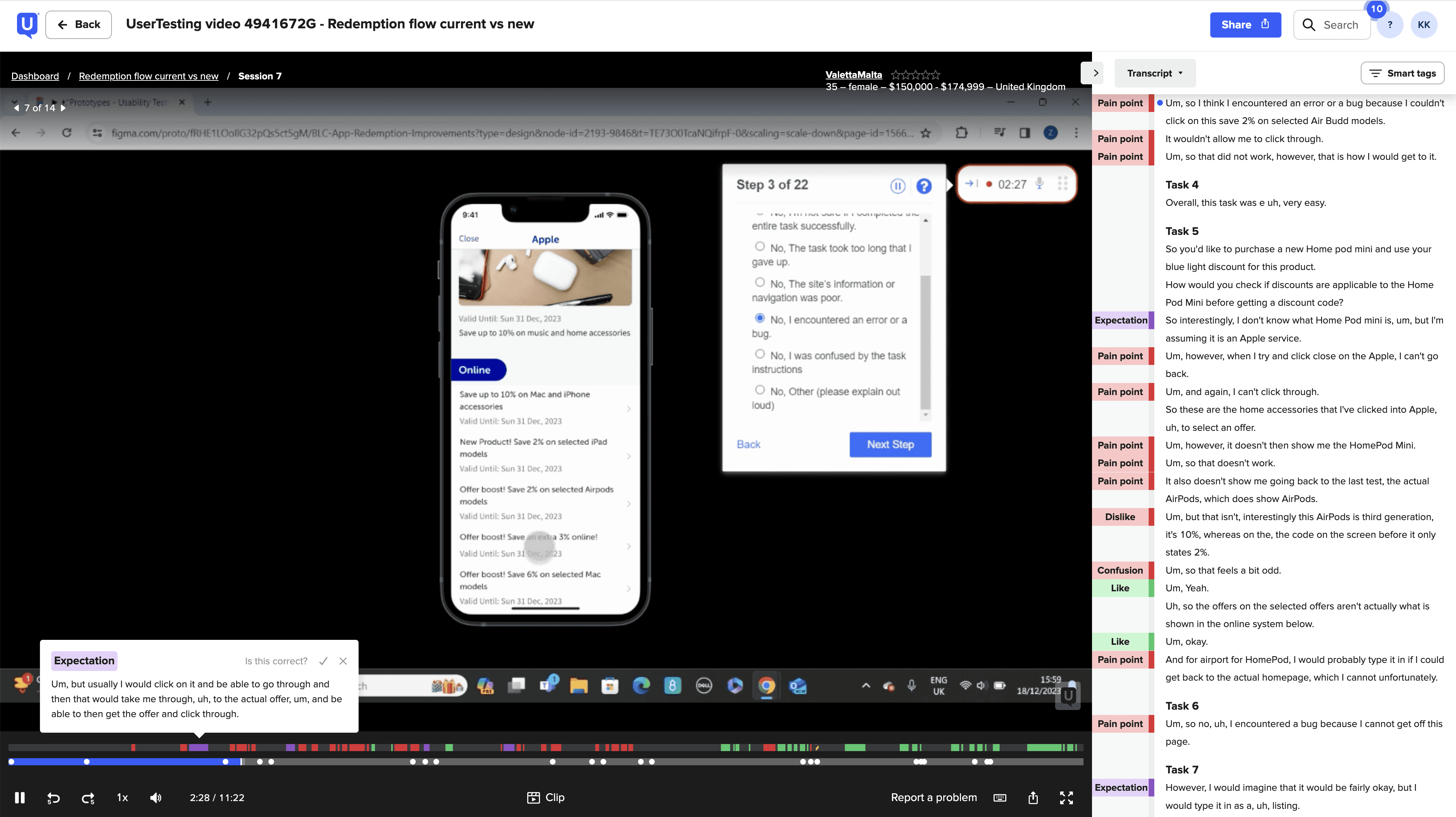
Confusion around how to claim different offer types
Difficulty finding key information (eg. exclusions)
Frustration with unnecessary steps
💡 No such thing as a bad idea
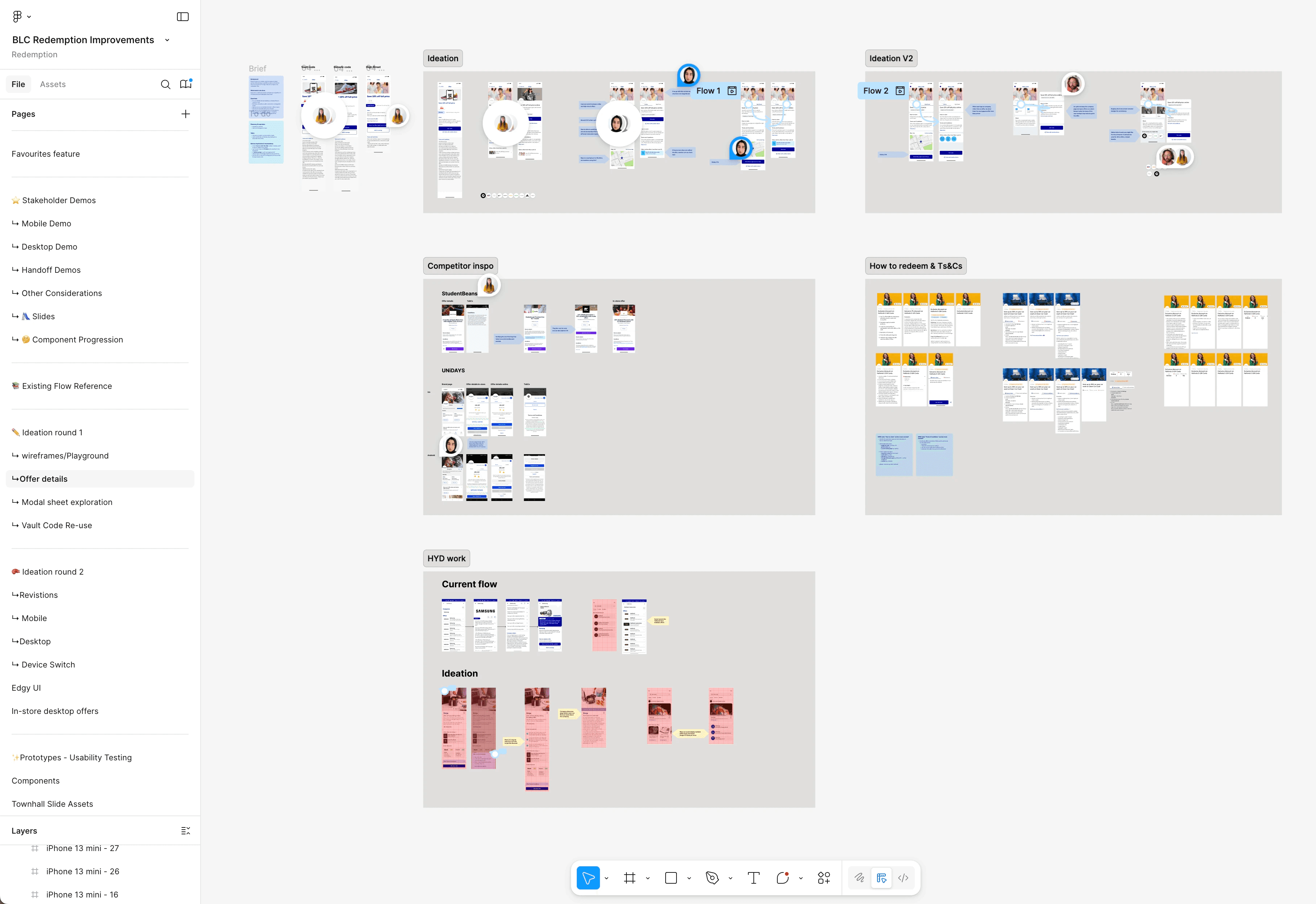
With these insights, I explored multiple possible flows, intentionally diverging first to generate broader options before aligning with the team. Early rounds focused on reducing cognitive load and minimising redundant screens.
Offer Sheet 📋 & Magic Button 🪄
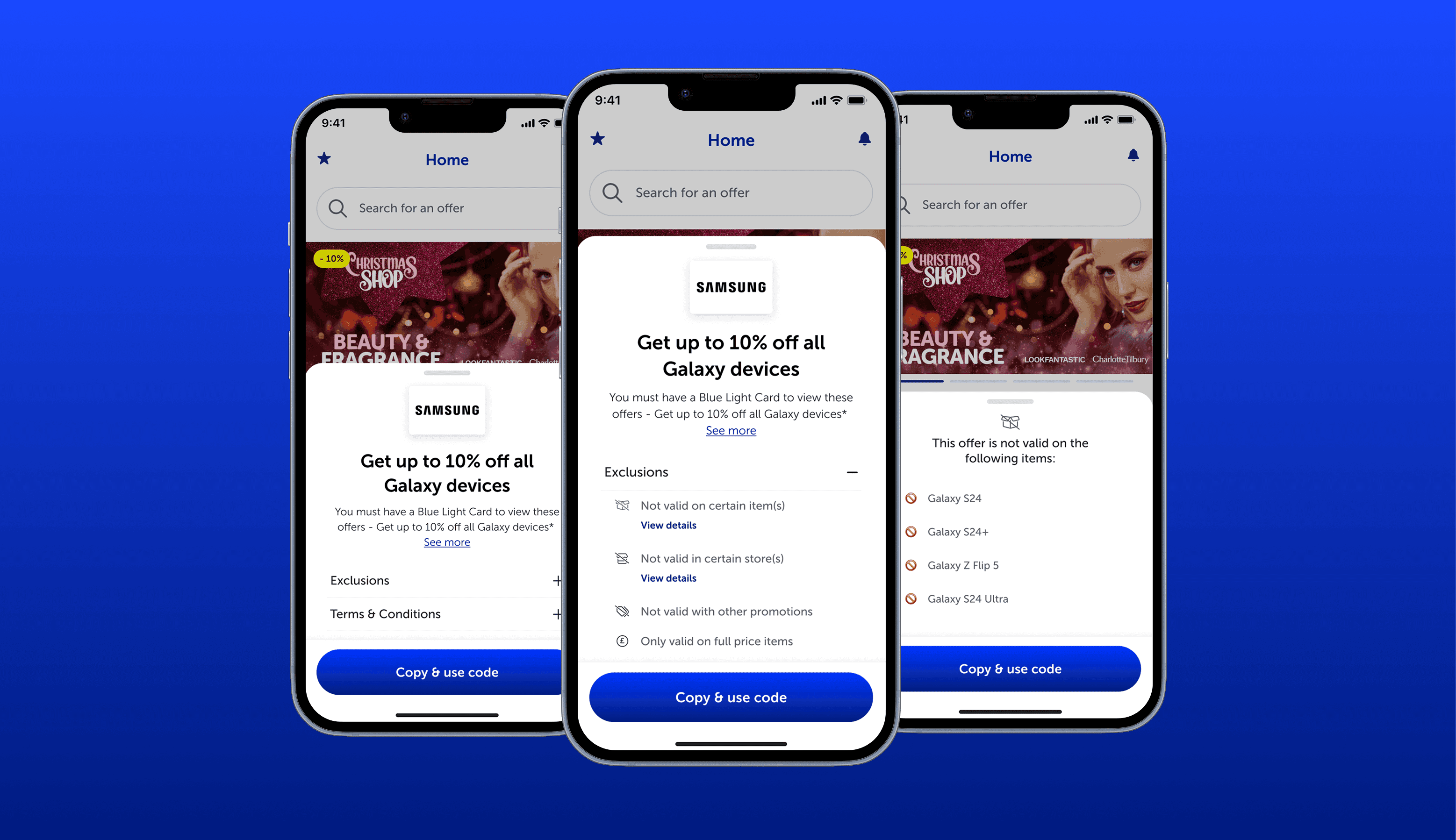
During ideation, I explored ways to simplify navigation and reduce the number of screens a member had to move through. This led to the idea of an offer sheet: a flexible overlay that sits on top of the home, company, or category pages depending on where the user clicks from. It creates a consistent, predictable entry point into offers and removes unnecessary back-and-forth navigation.
To make the redemption moment feel clearer and more rewarding, I also introduced a two-state “magic” button. The first state encourages action; once tapped, the second state provides immediate, contextual instructions. This small interaction both delights users and delivers guidance at exactly the right moment without crowding the UI.

User Testing 🧪 & Iterating 🔄
We tested the offer sheet concept against the live experience, and the new UI consistently performed better:
93% of users successfully claimed an offer with the new flow (vs. 85% with the old).
78% rated the new UX Good–Excellent, with 0% rating it Poor (old: 60% Good–Excellent, 28% Poor).
The new design also improved users’ ability to check for exclusions, but still only 64% completed this task, highlighting an opportunity to make exclusions more visible.
Overall, the tests validated the new direction while revealing a clear need to better surface exclusions. Based on this, I iterated the UI to make those details easier to spot and understand.
The new redemption experience delivered strong results for both members and the business. The A/B test showed a 4.82% uplift in total transactions, translating into an estimated £2m annualised revenue increase. Usability testing reinforced this direction, with 93% of users successfully claiming an offer in the new flow (vs. 85% previously) and 78% rating the experience Good–Excellent, compared to 60% for the current design.
Beyond conversion, the new offer sheet pattern reduced friction, simplified navigation, and created a consistent, scalable entry point for offers across the app. It also supported the company’s move to a React-based hybrid architecture and set a stronger foundation for future analytics, experimentation, and design iteration.
This project ran alongside a major shift from a legacy PHP stack to a modern React-based product, which meant tight timelines and frequent technical constraints. To stay aligned, I initiated early design–engineering discussions, set up regular reviews, and worked closely with the engineers and PM to keep decisions fast and collaborative.
A key challenge emerged on web: the “magic button” flow worked in the app but was blocked by browser rules against automatic redirects. I redesigned the journey with a required second click on web, keeping the experience coherent while keeping build time low.
One of the most exciting outcomes was that this new flow now had proper product analytics and a cleaner, more modular structure. Even though I moved teams after delivery, the foundation we set meant the team could finally run experiments and iterate quickly to further improve the journey.